How to Develop a Winning Poker Strategy
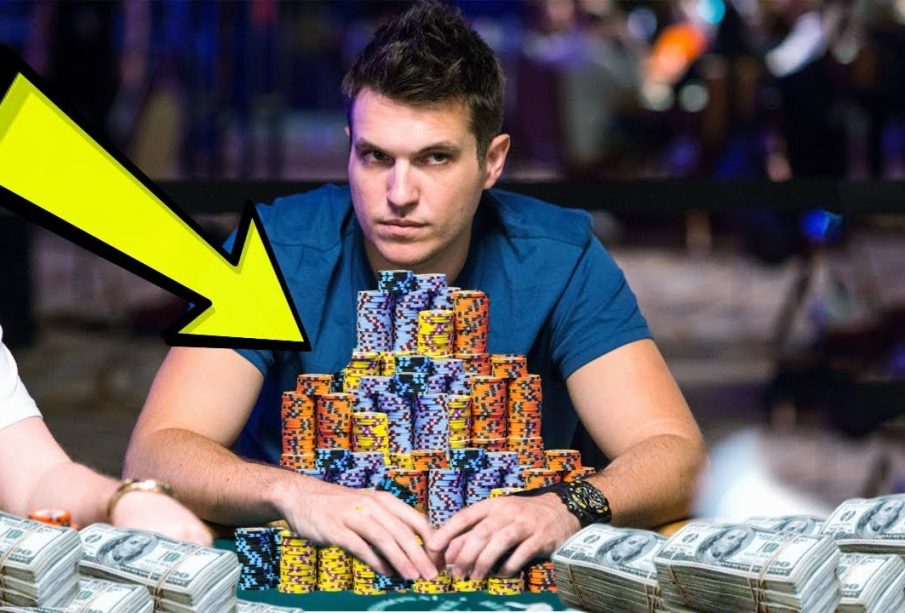
Poker is one of the few games that blend skill, psychology, probability, and strategy into a single competitive experience. While luck plays a role in the short term, the long-term winners are those who understand the math, control their emotions, and make calculated decisions based on incomplete information. Developing a winning poker strategy takes time, discipline, and a structured approach to learning both the technical and psychological sides of the game.
Understanding the Foundation of Poker Strategy
To become a successful poker player, it’s crucial to first understand that poker isn’t purely about cards—it’s about decision-making under uncertainty. Every action, whether folding, betting, or raising, should be based on logic rather than emotion. A strong strategy involves analyzing probabilities, reading opponents, managing bankrolls, and mastering timing.
The Role of Probability and Expected Value
Poker is a game of mathematics. Understanding pot odds, implied odds, and expected value (EV) helps you determine when a decision is profitable in the long run.
- Pot odds compare the size of the current pot to the cost of a potential call.
- Implied odds account for the potential winnings if you hit your hand later.
- Expected value measures whether a particular play yields a positive or negative outcome over many iterations.
A winning poker player constantly evaluates EV to ensure every decision aligns with long-term profitability.
Positional Awareness
Your position at the table determines the strength of your strategy. Acting later in a hand gives you more information about opponents’ actions, enabling more accurate decisions.
- Early position (EP): Play tighter; focus on strong hands since many players act after you.
- Middle position (MP): You can widen your range slightly but still remain selective.
- Late position (LP): The best position, allowing you to exploit information and control pot size.
Positional awareness separates professional players from amateurs, as it influences how you adjust your range and aggression level.
Building a Preflop Strategy
A disciplined preflop approach sets the tone for profitable decisions postflop. Without it, even advanced postflop play won’t save you from costly mistakes.
Hand Selection and Ranges
Every professional player uses preflop ranges as the foundation of their game plan. Rather than memorizing specific hands, learn the concept of ranges—a spectrum of possible hands based on position.
- In early position, stick with premium hands like A-A, K-K, Q-Q, A-K, and A-Q.
- From middle position, expand slightly with suited connectors and medium pairs.
- In late position, take advantage of looser play to steal blinds and apply pressure with hands like suited aces and broadway combinations.
Mastering this selective aggression ensures you enter pots with purpose, giving you a long-term edge.
Balancing Aggression and Control
Winning players aren’t reckless; they’re strategically aggressive. Controlled aggression—raising and betting rather than merely calling—forces opponents to make difficult decisions. The goal is to apply pressure and win pots without always needing the best hand. However, balance is essential. Over-aggression can lead to predictability, allowing skilled opponents to trap you.
Mastering Postflop Play
The majority of poker decisions happen after the flop. This stage demands advanced understanding of board textures, hand strength, and opponent tendencies.
Reading Board Texture
Every flop tells a story. Understanding the texture helps you determine whether it connects strongly with opponents’ ranges.
- Dry boards (e.g., K♠7♦2♣): Fewer draws, better for continuation bets.
- Wet boards (e.g., J♥10♥9♠): Many drawing possibilities; proceed cautiously.
Recognizing these distinctions enables more accurate bet sizing and bluff frequency.
Value Betting vs. Bluffing
A solid poker strategy depends on the right balance between value bets and bluffs.
- Value betting: Bet when you expect weaker hands to call.
- Bluffing: Bet to make better hands fold.
The art of bluffing lies in storytelling. Your betting pattern should make sense as if you actually hold the hand you’re representing. To maintain credibility, mix up your play—occasionally show strong hands in spots where you might bluff, and vice versa.
Understanding Player Types and Adjusting Strategy
Every poker table has a mix of player archetypes. Recognizing them and adapting is key to maximizing profit.
Common Player Profiles
- Tight-passive (“rock”): Rarely bets or raises; focus on extracting value when they finally play a hand.
- Loose-passive (“calling station”): Calls too often; value bet heavily and avoid bluffing.
- Tight-aggressive (TAG): The most balanced type; focus on counter-bluffing and exploiting timing.
- Loose-aggressive (LAG): Applies pressure constantly; use patience and trap them with strong hands.
Adapting to each style requires discipline and observation. Smart players track bet sizing patterns, timing, and table talk to identify tendencies.
Emotional Discipline and Mental Fortitude
No poker strategy succeeds without mental strength. Emotional control, or tilt management, separates consistent winners from average players.
Avoiding Tilt
Tilt refers to emotional decision-making after losing a big hand or facing bad luck. To avoid it:
- Take breaks after major losses.
- Set stop-loss limits to prevent emotional play.
- Reframe losses as statistical variance rather than personal failure.
The best players don’t focus on individual results but rather on making the right decisions repeatedly.
Developing Patience and Focus
Poker rewards patience. For hours, you might fold marginal hands until the right opportunity arises. Successful players treat the game as a marathon, not a sprint. To stay focused:
- Practice mindfulness before sessions.
- Review hands to stay engaged.
- Keep distractions minimal during play.
Bankroll Management and Long-Term Success
A winning strategy also depends on financial discipline. Even the most skilled players can go broke without proper bankroll management.
Setting Limits and Managing Variance
Your bankroll should withstand swings caused by variance. A general rule is to keep at least 30–50 buy-ins for your current stake level. Never risk money you can’t afford to lose, and move down in stakes when your bankroll drops below the threshold. Proper management ensures you survive losing streaks and stay in the game long enough to realize your skill edge.
Tracking Performance and Analyzing Data
Use tracking tools and hand history reviews to evaluate performance. Look for:
- Patterns in losing hands
- Frequency of bluffs succeeding or failing
- Leaks in positional play
Data-driven analysis prevents complacency and sharpens intuition.
The Power of Table Image and Perception
Your table image—how others perceive your play—directly influences how profitable you become. Players react differently based on whether they view you as tight, loose, aggressive, or passive. Use this perception to your advantage by changing gears strategically. For instance, if you’ve been playing tight, suddenly increasing aggression can cause opponents to fold more often, maximizing fold equity.
Leveraging Advanced Concepts for a Competitive Edge
GTO (Game Theory Optimal) vs. Exploitative Play
Modern poker revolves around two strategic approaches:
- GTO strategy: Balances play to be unexploitable, using theoretically sound decisions.
- Exploitative play: Deviates from GTO to capitalize on opponents’ weaknesses.
A strong player combines both. Against skilled players, use GTO principles; against weaker opponents, apply exploitative adjustments to maximize profit.
Hand Reading and Range Construction
Rather than guessing exact hands, focus on constructing ranges—the spectrum of hands your opponent could logically hold. Through pattern recognition and betting analysis, you can narrow ranges and make informed decisions about bluff catching, folding, or value betting.
FAQs
Q1: How often should I bluff in poker?
There’s no fixed percentage—it depends on the table dynamics and your opponent type. However, a balanced strategy involves bluffing selectively, especially in positions where your range appears strong, and your opponent is capable of folding.
Q2: What’s the most important poker skill for long-term success?
Discipline. Technical skills matter, but emotional discipline—knowing when to fold, when to quit, and when to stay calm—defines consistent winners.
Q3: How do I improve my poker decision-making?
Review hand histories regularly, use tracking software to analyze mistakes, and discuss strategy with experienced players. Continuous reflection refines judgment and sharpens instincts.
Q4: How can I tell if I’m playing at the right stake level?
If your bankroll consistently covers at least 30–50 buy-ins for your current game and you’re not emotionally affected by single-session losses, you’re at the right level. Otherwise, move down until variance becomes manageable.
Q5: What’s the best way to learn advanced poker theory?
Study professional materials, watch high-stakes analysis videos, and practice solving hand situations using solver-based training tools. Combine theory with live experience to internalize advanced strategies effectively.
Developing a winning poker strategy takes time, commitment, and continuous learning. It’s not about memorizing charts—it’s about understanding how to adapt, stay disciplined, and outthink your opponents consistently. By blending mathematical precision, psychological insight, and emotional control, you can transform poker from a game of chance into a game of long-term mastery.