Popular Casino Games and How Their Rules Differ
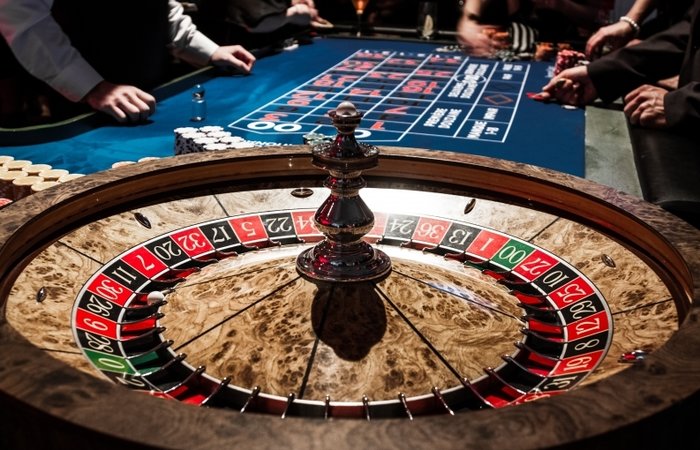
Entering a bustling casino floor reveals a diverse landscape of green-felt tables, whirring wheels, rattling dice, and shuffling cards. To an inexperienced spectator, the entire floor might look like a single, uniform environment where people risk chips on luck. However, every casino game operates under fundamentally distinct structural rules, player decision points, mathematical odds, and payout conditions.
Certain table games demand tactical decision-making at every step, where choosing the wrong card action directly surrenders value to the house. Other games require zero strategy once chips are placed, leaving players to watch an unalterable sequence dictated entirely by physical mechanics or fixed dealing protocols. Understanding how the rules of classic casino games differ—from card-counting foundations in blackjack to the independent spins of roulette—enables players to identify the exact style of play, risk exposure, and pace that aligns with their personal approach.
Blackjack: The Battle of Interactive Card Decision-Making
Blackjack, also known as twenty-one, stands as the most popular card-based table game in modern casinos. The core objective of blackjack is not to reach twenty-one, but rather to build a card total that beats the dealer’s hand without exceeding twenty-one, an event known as busting.
The distinguishing feature of blackjack compared to almost all other table games is agency: players make active strategic decisions on their hand after the initial deal.
-
Card Valuations: Cards numbered two through ten carry their face values. Face cards including jacks, queens, and kings count as ten. An ace is dynamic, functioning as either a one or an eleven depending on what most benefits the player’s total without causing a bust.
-
Player Decisions: After receiving two starting cards against the dealer’s visible upcard, the player can hit to take another card, stand to freeze their total, double down to double their stake in exchange for exactly one additional card, or split identical pairs into two separate active hands.
-
Dealer Constraints: Unlike players, who can stand on whatever total they prefer, the dealer must follow strict house rules. The dealer usually must draw cards until reaching at least seventeen, leaving zero room for subjective discretion.
-
The Payout Purity: A standard winning hand pays even money (one-to-one), while a natural blackjack (an ace and a ten-value card dealt as the opening two cards) traditionally pays three-to-two, though some modern tables offer less advantageous six-to-five payouts.
Because player decisions influence the final outcome, employing mathematical basic strategy can drop the casino house edge in blackjack below one percent, making it one of the most statistically favorable games on the floor.
Roulette: Mechanical Probability and Diverse Bet Spreads
Roulette abandons playing cards entirely in favor of an engineered physical mechanism: a spinning mahogany wheel containing numbered pockets and a counter-rotating ivory ball. Once the croupier spins the wheel and releases the ball, players have zero influence over the outcome. The game is built entirely around independent trials and spatial wagering patterns.
The rules of roulette revolve around the layout of the betting table, which offers two broad categories of wagers:
-
Inside Bets: Wagers placed directly on specific numbers or small groupings of adjacent numbers on the grid. A straight-up single-number bet pays thirty-five to one, a split across two numbers pays seventeen to one, a street across three numbers pays eleven to one, and a corner covering four numbers pays eight to one.
-
Outside Bets: Broad wagers positioned along the perimeter of the number layout. These include even-money propositions like red or black, odd or even, and low (one through eighteen) or high (nineteen through thirty-six), alongside dozen and column bets that pay two to one.
The primary rule differences in roulette stem from regional wheel construction:
-
European Roulette: Features thirty-seven numbered pockets from zero through thirty-six. With only a single green zero pocket providing the house advantage, the house edge is 2.70 percent.
-
American Roulette: Features thirty-eight numbered pockets, adding an extra green double-zero pocket. This extra pocket changes the mathematical odds without increasing standard bet payouts, almost doubling the house edge to 5.26 percent.
-
French Roulette: Uses a single-zero wheel like European roulette, but incorporates specialized rules such as La Partage or En Prison. Under these rules, if a player places an even-money bet and the ball lands in the green zero, they receive half their stake back or the bet is held for the next spin, lowering the house edge on even-money bets to 1.35 percent.
Baccarat: Strict Tableau Automation and Spectator Wagers
Baccarat presents an intriguing contrast to blackjack. Although both are card games dealt from multi-deck shoes, baccarat removes all mid-hand decision-making from the player. When sitting at a baccarat table, you do not play your own hand; instead, you bet on which of two scripted hands—the Player or the Banker—will finish closest to a total of nine.
The rule mechanics of baccarat follow strict mathematical protocols:
-
Card Valuations and Point Modulo: Tens and face cards are worth zero points, aces count as one point, and two through nine retain their face values. Hand values are calculated by adding the cards together and dropping the tens digit. For instance, a six and an eight equal fourteen, which drops the ten to create a hand value of four.
-
The Drawing Tableau: If either the Player or the Banker hand achieves an eight or a nine on the initial two-card deal, it is declared a natural, and the round immediately terminates. If neither achieves a natural, strict third-card rules dictate actions. The Player hand always stands on six or seven and draws on zero through five. The Banker drawing rules are more intricate, depending partly on the Banker’s total and the exact third card drawn by the Player.
-
The Commission Dynamic: Because the Banker hand acts second and benefits from positional knowledge, it wins slightly more often than the Player hand. To balance this advantage, casinos traditionally charge a five percent commission on winning Banker wagers, resulting in a low house edge of 1.06 percent on the Banker and 1.24 percent on the Player.
-
The Tie Bet Trap: Players can also wager that the two hands will finish with identical totals, which typically pays eight to one or nine to one. However, this wager carries a steep house edge exceeding fourteen percent, making it one of the most unfavorable proposition bets on the casino floor.
Craps: Multi-Stage Dice Rolling and Community Action
Craps is the undisputed center of physical energy in a traditional casino, distinguished by being the only mainstream table game where a player, designated as the shooter, physically throws the implements that dictate everyone’s outcome. Craps is characterized by an extensive, multi-layered betting layout that resolves across multiple stages of dice rolls.
The foundational rules of craps operate around two main game phases:
-
The Come-Out Roll: The initial roll of a new round. Bettors primarily wager on the Pass Line or Don’t Pass Line. On a Pass Line wager, rolling a seven or eleven immediately wins at even money, while rolling a two, three, or twelve (known as craps) loses the stake immediately.
-
Establishing the Point: If the shooter rolls a four, five, six, eight, nine, or ten on the come-out roll, that number becomes the point. The dealer moves a marker puck to that number on the layout. The game enters its second phase, where the shooter must roll that established point number again before rolling a seven. If the shooter hits the point, Pass Line bets win; if the shooter rolls a seven first (sevening out), Pass Line bets lose and the dice pass to a new shooter.
-
True Odds Wagers: Once a point is established, craps offers what is widely recognized as the single best wager in the entire casino: free odds. Players can place an additional bet behind their Pass Line wager that pays out at true mathematical odds with absolute zero house edge.
-
One-Roll Center Propositions: Surrounding the core game are high-risk proposition bets, such as betting on snake eyes (two ones) or any seven. While these bets offer tempting payouts like thirty to one, they carry house edges ranging between nine and sixteen percent.
Casino Poker Variants: Three Card and Caribbean Stud
While traditional Texas Hold’em pits human players against one another in a psychological contest of bluffing and position, casino house poker games alter the rules entirely. In games like Three Card Poker, Caribbean Stud, and Ultimate Texas Hold’em, players compete solely against the dealer’s hand, removing the psychological bluffing elements.
These proprietary table games introduce shared structural rules:
-
The Ante and Play Sequence: Players place an initial mandatory ante wager to receive cards. After inspecting their hand against the dealer’s visible cards, the player must decide whether to fold and forfeit their ante or make a secondary play bet to challenge the dealer.
-
Dealer Qualifying Thresholds: A central mechanic in casino poker is that the dealer’s hand must qualify with a minimum strength to trigger full action on both bets. In Three Card Poker, the dealer typically needs queen-high or better; in Caribbean Stud, an ace-king or a pair is usually required. If the dealer fails to qualify, play wagers push and only the original ante pays out, moderating the player’s potential win even with a monster hand.
-
Modified Hand Hierarchies: Because games like Three Card Poker use only three cards, standard poker hand rankings are modified to match mathematical rarity. For instance, a three-card straight is mathematically harder to hit than a three-card flush, reversing their standard poker hierarchy.
Key Rule and Mechanical Differences at a Glance
Comparing the operational frameworks of these popular games clarifies how they fundamentally differ in play structure:
-
Primary Driver of Outcomes: Blackjack and casino poker variants use playing cards combined with strategic player decisions; baccarat uses playing cards with automated drawing rules; roulette uses physical centrifugal ball mechanics; craps uses rolling dice physics.
-
Player Role During Active Rounds: In blackjack, the player dictates hand actions (hitting, standing, doubling); in roulette and baccarat, the player is entirely a passive spectator after bets are placed; in craps, the player can act as the physical shooter rolling the dice.
-
House Edge Range: Blackjack, baccarat, and craps feature base bets with house edges sitting between 0.5 percent and 1.5 percent; roulette carries a house edge between 1.35 percent and 5.26 percent depending on wheel type; proprietary casino poker games generally operate with house edges between two and five percent on baseline wagers.
Frequently Asked Questions
Why does American roulette have a worse house edge than European roulette?
American roulette includes both a single zero and a double zero pocket, bringing the total pocket count to thirty-eight, whereas European roulette features only a single zero pocket across thirty-seven total slots. Both games offer identical thirty-five-to-one payouts for hitting a single number. The presence of that thirty-eighth pocket in American roulette lowers the probability of winning any individual number bet without increasing the payout rate, expanding the casino advantage from 2.70 percent up to 5.26 percent.
What happens in blackjack if both the player and the dealer finish with the exact same point total?
When a player and the dealer finish a round with identical hand totals (for example, both holding eighteen), the result is a push. Under standard blackjack rules, a push means neither party wins or loses; the round is a draw, and the player’s original wager is returned without deduction. However, if both the player and the dealer bust over twenty-one, the player loses immediately because the player must act first and busts before the dealer’s hand is ever drawn.
Why is card counting effective in blackjack but completely useless in baccarat?
Card counting works in blackjack because cards removed from the shoe directly alter the balance of remaining values, and players can exploit these shifts by varying bet sizes and altering strategic play choices (such as doubling down or taking insurance). In baccarat, while card depletion also slightly shifts underlying probabilities, the strict tableau rules prevent players from altering hand actions. Extensive mathematical simulations have confirmed that the advantage gained by counting baccarat cards is so microscopically tiny that it is impossible to exploit profitably in practical play.
Can multiple players at a craps table bet against each other?
While craps players do not place wagers directly with one another, they can bet on opposite outcomes through the house layout. Most players at a craps table wager on the Pass Line, cheering for the shooter to succeed. However, a player can choose to bet the Don’t Pass Line, effectively wagering that the shooter will seven out and fail to make their point. In this sense, Don’t Pass bettors are financially positioned against the rest of the table, though all payouts are settled independently by the casino.
What is the difference between mini-baccarat and traditional big-table baccarat?
The underlying card rules and mathematical drawing protocols of mini-baccarat and traditional baccarat are identical. The differences lie entirely in table size, pacing, and ceremonial handling. Traditional baccarat is played in segregated high-limit rooms on large fourteen-player tables where players pass the shoe and physically squeeze the cards. Mini-baccarat is played on a standard blackjack-sized table on the main gaming floor, where the dealer controls the shoe, turns all cards immediately, and executes hands at a much faster pace.
Why do side bets across all casino table games typically carry higher house edges?
Side bets, such as perfect pairs in blackjack, 21 plus 3, or dragon bonus bets in baccarat, are engineered to offer large, tempting payout multipliers (like ten to one, thirty to one, or one hundred to one) for small stakes. To fund these occasional large payouts while maximizing casino profitability, operators configure the underlying mathematical odds so that the house edge on side bets typically ranges from five percent to over fifteen percent, far higher than the conservative baseline wagers of the core games.