How Online Poker Differs From Playing at a Live Table
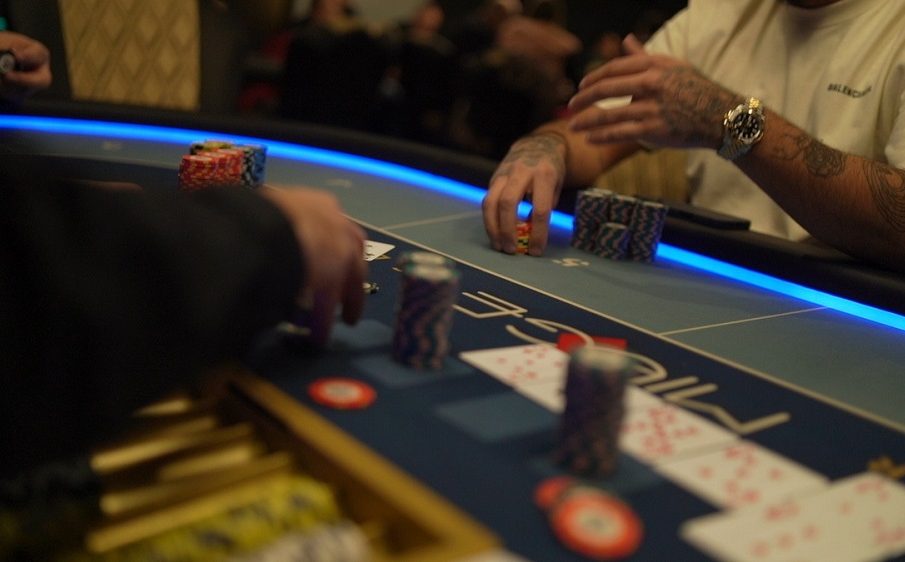
At their core, online poker and live poker share the exact same rulebook. In both formats, a flush beats a straight, player position dictates strategic power, and the fundamental goal remains extracting chips from opponents through mathematical odds, position, and psychology. A player who understands pot odds, equity calculations, and bet sizing can sit down in a casino poker room or open a virtual client and understand the underlying mechanics of the game.
Yet, despite this shared foundation, the actual experience of playing online differs radically from sitting at a physical felt table. Moving between these two worlds is not merely a cosmetic adjustment; it requires an entirely different mental approach, altered observational habits, and distinct tactical adjustments. What works seamlessly when staring down an opponent across an oval table can fail completely in an anonymous digital lobby, and the analytical habits developed across thousands of virtual hands can prove clumsy in a live casino setting.
Understanding how these two environments diverge in pacing, player behavior, information gathering, and technical demands allows players to adapt their skill sets and succeed in whichever arena they choose to compete.
The Disparity in Hand Volume and Operational Pacing
The most striking operational contrast between online and live poker is game velocity. The physical mechanics of dealing playing cards, collecting chips, calculating side pots, and managing player actions take considerable time in a live casino.
In a standard brick-and-mortar cardroom, an efficient human dealer running a full-ring table will rarely distribute more than twenty-five to thirty hands per hour. If several hands reach the river, feature intricate tanking decisions, or require floor rulings to resolve disputes, that volume can drop to twenty hands an hour. This slow rhythm forces a live player to wait extended periods between playable hands, making patience the paramount virtue.
The digital arena removes physical friction entirely:
-
Automated Dealing and Pot Calculation: Online software deals hands instantaneously, collects chips without human error, and splits multi-way pots in milliseconds. A standard single online cash table routinely processes sixty to eighty hands per hour, more than double the volume of a live game.
-
Fast-Fold Poker Formats: Modern digital operators offer quick-fold variants, such as Zoom or Rush poker, where folding immediately transports the player to a brand-new table with fresh cards. In these pools, a player can see between two hundred and three hundred hands per hour on a single screen.
-
Multi-Tabling Capabilities: While a live player is physically constrained to one seat in one room, an online player can open four, eight, twelve, or more tables simultaneously across computer monitors. An experienced multi-tabler can easily log over one thousand hands in a single hour of active play.
This vast gap in hand volume fundamentally alters how variance behaves. A live player might take an entire calendar year to log twenty thousand hands, meaning a prolonged downswing can feel endless. An online grinder can run through that exact same sample size in a single week, experiencing the full mathematical spectrum of the game in a fraction of the time.
Information Gathering: Physical Tells Versus Behavioral Metrics
Every poker decision relies on incomplete information. How you collect, categorize, and interpret that information represents the primary difference in how players read each other across the two mediums.
The Nuances of Live Physical Reads
Live poker is a visceral, multi-sensory environment. When you play in person, opponents are seated inches away, providing a continuous stream of non-verbal information:
-
Involuntary Physiological Reactions: Rapid pulse visible in the carotid artery, shallow breathing, sudden changes in posture, tremors in the hands while handling chips, or pupil dilation.
-
Chip Handling and Motor Habits: How a player places chips into the pot often reveals their underlying comfort level. Splashing chips with flourish, sliding them deliberately forward, or hesitating with an open palm can provide reliable clues about hand strength.
-
Verbal Sparring and Table Talk: Live players frequently engage in conversation during a hand. Listening to changes in vocal pitch, speech cadence, and word choice helps experienced live players detect forced bluffs or comfortable value holdings.
-
Baseline Behavioral Shifts: Observing how a player interacts when disinterested versus when engaged provides an operational baseline that makes unusual deviations stand out.
The Analytics of Digital Behavioral Tracking
Online poker eliminates physical bodies entirely. Opponents are represented by static digital avatars, screen names, and geographic flags. As a result, reading an online opponent requires parsing digital footprints, mechanical timing, and data metrics:
-
Timing Tells: How quickly an opponent acts provides valuable clues. An instantaneous check often signals a player using the auto-check button with complete weakness, while an uncharacteristic pause before an obvious play can suggest an attempt to manufacture false strength.
-
Bet Sizing Patterns: Without physical cues, bet sizing becomes the primary diagnostic tool. Online players often use precise percentage-of-pot buttons. Tracking whether an opponent uses sixty-six percent pot for bluffs and eighty percent for value hands exposes structural imbalances in their strategy.
-
Heads-Up Displays and Tracking Databases: Where legally permitted, online players utilize Heads-Up Displays, known as HUDs. This software imports hand histories in real time, calculating an opponent’s exact statistical tendencies across thousands of hands: how often they raise pre-flop, fold to three-bets, continuation-bet the flop, or fold to river aggression. Strategic decisions become grounded in hard statistical data rather than intuition.
Skill Distribution and Player Pool Competency
The average skill level found in a live cardroom differs dramatically from the baseline competence found in an online poker lobby at an equivalent monetary stake.
A two-hundred-dollar buy-in live cash game (such as a one-dollar/two-dollar or one-dollar/three-dollar blind structure) is the absolute lowest stakes tier offered in most commercial brick-and-mortar casinos due to physical floor overhead. Consequently, these games attract a broad recreational demographic: weekend hobbyists, tourists seeking entertainment, gambling enthusiasts, and retirees looking for social interaction. Strategic discipline is often loose, multi-way pots to the flop are frequent, and basic fundamental play can produce a healthy win rate.
Conversely, a two-hundred-dollar buy-in online game (one-dollar/two-dollar blinds) represents an elite, highly competitive environment:
-
Accessible Micro-Stakes Filter: Online platforms offer stakes descending all the way down to two-cent blinds (two-dollar total buy-ins). Novices and casual hobbyists naturally gravitate toward these micro-stakes, creating a natural filtration system.
-
The Dominance of Game Theory Optimal Study: By the time an online player ascends to mid-stakes games like one-dollar/two-dollar, they are competing against dedicated students of the game who utilize solver technology, study equity distributions, and execute balanced Game Theory Optimal strategies.
-
Aggressive Pre-Flop Dynamics: In live low-stakes games, players frequently limp into pots to see cheap flops. Online, open-limping is virtually non-existent; pots are contested through aggressive raising, polarized three-betting, and relentless positional pressure.
A profitable, winning live cash-game player who transitions to the equivalent numerical stake online will often find the competition brutally tough, while an online micro-stakes grinder often discovers that low-stakes live games are remarkably soft by comparison.
Social Environment and Physical Endurance
The physical setting in which the game takes place shapes the psychological demands placed on the player.
Live poker is an inherently social experience. Players spend hours sitting shoulder-to-shoulder, chatting about daily life, ordering drinks, celebrating big pots, and commiserating over bad beats. For many participants, the social atmosphere is the primary appeal of the game. However, this environment also introduces unique stressors: maintaining poker-face discipline under direct visual scrutiny, sitting in uncomfortable chairs for long stretches, dealing with disruptive table personalities, and traveling to and from physical casino properties.
Online poker, by contrast, is a solitary, self-contained endeavor:
-
Ergonomic Control: You play from your private home office, choosing your own chair, monitor layout, ambient temperature, background audio, and schedule.
-
Emotional Isolation: While convenient, playing online lacks social lubrication. Facing cold computational variance without human interaction can lead to isolation and tilt. When a player suffers a severe bad beat alone in a dark room, the emotional sting can feel much more personal and destabilizing.
-
Physical Posture Demands: While live poker requires upright physical engagement, multi-tabling online requires intense manual motor coordination: rapid mouse clicking, continuous eye scanning across multiple monitors, and high-frequency cognitive processing that drains mental energy quickly.
Game Integrity, Rake Structures, and Platform Overhead
The financial architecture that sustains these games differs considerably between the virtual sphere and brick-and-mortar cardrooms.
In live poker, operators face significant commercial overhead: heating and air conditioning large facilities, paying surveillance personnel, employing certified floor managers, and compensating human dealers. To cover these expenses, live casinos take a rake from every pot, often structured as a ten-percent fee capped at four to six dollars, sometimes accompanied by additional promotional drops to fund bad-beat jackpots. Furthermore, live players must factor in physical dealer tipping, parking fees, meals, and fuel costs, which eat away at their hourly profit margins.
Online operators operate with vastly reduced physical overhead, enabling them to process millions of transactions with minimal marginal cost:
-
Micro-Rake Caps: Online rake percentages are typically lower, with caps dynamically scaling according to the stake level and the number of active players in the hand.
-
Rakeback and Loyalty Tiering: Digital platforms compete aggressively for high-volume players by offering rakeback systems, returning a substantial percentage of paid fees directly to the player’s account based on monthly volume.
-
Absolute Mechanical Accuracy: An online client never miscounts a pot, never accidentally mucks a winning hand, and never deals out of turn.
However, online players face unique integrity risks that do not exist at a monitored physical table: confronting sophisticated automated bots, dealing with players operating illegal real-time assistance software, and battling organized collusion rings communicating over external phone channels. Online rooms must invest heavily in advanced behavioral fraud algorithms to preserve game integrity.
Bankroll Management Principles Across Both Mediums
While the mathematics of bankroll management apply everywhere, the guidelines for safe bankroll sizes diverge based on hand volume and opponent competency.
A recreational live cash-game player can often navigate their local casino games comfortably with a conservative reserve of twenty to thirty full buy-ins. Because the games are softer, the average edge of a fundamentally sound player is much higher, which dampens long-term downswings. Furthermore, the slow speed of thirty hands an hour provides a natural safety brake, giving players ample time to step away from the table if they feel emotionally tilted.
Online bankroll management requires significantly higher capital buffers:
-
Fifty to One Hundred Buy-Ins for Cash Games: Because win rates are tighter against sharper opponents and hands process at breakneck speed, variance swings are steeper online. A skilled player can easily lose ten buy-ins across a few hours of aggressive multi-tabling without playing poorly.
-
One Hundred to Three Hundred Buy-Ins for Tournaments: Multi-table online tournaments regularly feature fields of three thousand to ten thousand entrants, compared to a few hundred players in a local casino weekly event. The sheer size of online tournament fields creates massive variance, necessitating enormous bankroll depth to survive long stretches between final-table finishes.
Adhering to rigorous, medium-specific financial rules is the only way to avoid sudden insolvency when variance takes its inevitable toll.
Frequently Asked Questions
Why is it generally easier to win money in a low-stakes live game than in an online game of the same stake?
Low-stakes live games are far softer because the minimum barrier to entry at a casino is higher. A one-dollar/two-dollar live game is the cheapest option available in a physical casino, so it naturally attracts recreational tourists, casual gamblers, and people looking for social entertainment. Online, the true recreational and inexperienced players are spread across penny-stakes games (like one-cent/two-cent or five-cent/ten-cent blinds). By the time you reach one-dollar/two-dollar online, you are facing serious players who study advanced game theory and play thousands of hands every week.
Do physical tells actually matter as much as portrayed in movies and television?
Physical tells do matter in live poker, but their importance is often sensationalized by mainstream media. Movies depict players spotting a miraculous, definitive tell—like an opponent spinning an Oreo cookie or tapping a ring—that dictates an all-in call. In reality, physical tells are subtle, probabilistic indicators that serve as supplementary evidence alongside board texture, bet sizing, and action history. Over-relying on amateur body language interpretation while ignoring underlying mathematics and range construction is a common novice mistake.
Is using a Heads-Up Display considered cheating in online poker?
In most jurisdictions and on most major platforms, standard Heads-Up Displays are entirely legal and explicitly permitted. HUDs simply aggregate historical hand histories that the player witnessed firsthand and present that statistical data in an easily digestible on-screen format. However, some modern online poker platforms have banned HUDs to create a more welcoming environment for casual players. What is universally considered illegal cheating is the use of Real-Time Assistance, which feeds live game actions into automated software solvers to tell the player the exact mathematically optimal move while the hand is in progress.
How should an online player adjust when transitioning to their first live casino game?
The biggest adjustment an online player must make in a live setting is managing pace and discipline. Dealing with the slow speed of thirty hands an hour can lead to extreme boredom, tempting former online players to play trash hands simply to stay involved. Furthermore, online players must practice manual physical tasks: protecting their hole cards with a chip, verbally declaring their actions clearly before moving chips, counting their own chip bets accurately without software prompts, and avoiding accidental string bets.
Can an experienced live poker player transition successfully to online poker without studying software solvers?
A live player transitioning to online micro-stakes (under twenty-five-dollar buy-ins) can succeed using solid, traditional ABC poker fundamentals and disciplined table selection. However, if a live player attempts to jump directly into mid-stakes online games without studying modern software solvers, equity distributions, and baseline game-theory concepts, they will likely struggle. The technical proficiency and pre-flop precision of modern online players require dedicated study outside the game.
Why do online poker platforms offer anonymous tables, and how does that impact strategy?
Anonymous tables hide screen names and player identities, assigning random numbers or seat labels to every seat at the start of each session. Operators introduce anonymous tables to prevent regular players and tracking software from profiling casual hobbyists, hunting weaker players, and running historical HUD databases. When playing on an anonymous table, historical data is eliminated; strategy shifts entirely toward reading real-time table dynamics, immediate bet sizing patterns, and playing a sound, balanced baseline strategy that does not rely on prior knowledge of an opponent’s habits.