
The Business Behind Successful Slot Machine Development
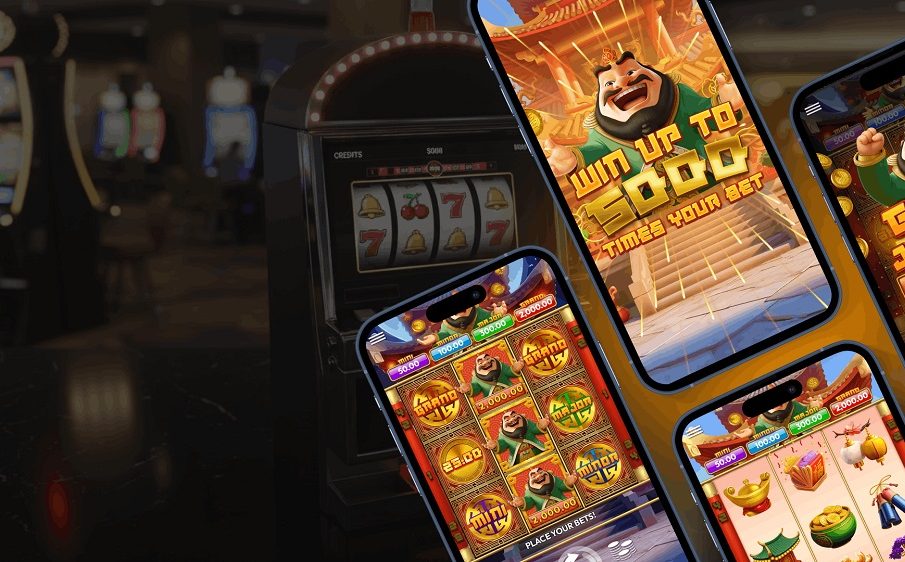
Walk through the doors of any major gaming resort in Las Vegas, Macau, or Atlantic City, and the senses are immediately met by a wall of radiant visual displays, chime sequences, and mechanical celebration tones. Modern slot machines dominate the floor space of contemporary land-based casinos, frequently generating upwards of seventy percent of a property total gaming revenue. Across digital landscapes, online slots represent the cornerstone of virtual casinos, commanding player engagement and recurring transaction volume.
Yet, behind the colorful reels, cascading animations, and jackpot celebrations lies a sophisticated, multi-billion-dollar enterprise. Slot machine development is an intricate intersection of mathematical engineering, behavioral psychology, audiovisual production, legal compliance, and commercial portfolio management. Developing a commercially successful slot title requires far more than artistic creativity. It demands an understanding of player retention metrics, operational revenue models, regulatory hurdles, and software performance. Deconstructing this specialized ecosystem reveals the precise strategies, economic models, and engineering practices that turn digital code and physical cabinets into durable, high-earning gaming properties.
The Mathematical Engine: The Foundation of Every Title
Before an artist sketches a concept character or an animator builds a bonus transition, the development process begins with a pure mathematical model. In the gambling industry, mathematics is the foundational architecture upon which everything else rests. A game with stunning graphics and a weak math model will fail rapidly on the floor, while a title with simple graphics and an exceptional mathematical loop can remain a top earner for decades.
Math designers construct a delicate balance between casino profitability and player satisfaction:
-
Return to Player Calculations: The Return to Player percentage represents the theoretical amount of money wagered on a machine that will be paid back to players over an extended statistical timeline, typically spanning millions of simulated spins. Most commercial slot math models target a payback rate between ninety-two and ninety-seven percent, depending on regulatory mandates and regional casino operating strategies.
-
The Role of Volatility: Volatility, or variance, dictates the distribution profile of payouts. Low-volatility math models award frequent, smaller payouts, extending the player bankroll and session time. High-volatility models deliver lengthy dry spells balanced by the statistical potential for massive, life-altering jackpots. Designing the volatility curve defines the target demographic: casual entertainment seekers prefer low-volatility games, while risk-tolerant gamblers pursue high-volatility products.
-
Hit Frequency Optimization: Beyond theoretical payback, hit frequency measures how often any spin generates a return. Game mathematicians tune hit frequencies, commonly calibrating them between twenty and thirty-five percent, to ensure players feel consistent positive reinforcement while maintaining the long-term mathematical house edge.
Mathematical integrity is non-negotiable. If an algorithm deviates by even a fraction of a percent during public play, the operator risks financial losses, loss of player trust, or immediate regulatory penalties.
Behavioral Psychology and Player Retention Design
The success of a slot machine is measured directly by coin-in, the total cumulative volume of money wagered on the terminal over time. To sustain high coin-in metrics, game studios design game mechanics informed by classic principles of behavioral psychology and operant conditioning.
Studios utilize proven psychological techniques to prolong active play:
-
Variable Ratio Schedules of Reinforcement: Rooted in early behavioral experiments, unpredictable rewards create the strongest, most habit-forming behavioral patterns. Because a player never knows which individual spin will trigger a bonus round or jackpot, the brain remains in a sustained state of anticipation and dopamine release.
-
Losses Disguised as Wins: On modern multi-line video slots, players regularly wager two dollars and receive a payout of fifty cents. Although the net financial result is an absolute loss of one dollar and fifty cents, the machine celebrates the event with upbeat musical flourishes, flashing reel borders, and coin counter animations. The brain registers the sensory stimuli as a victory, preserving positive emotional momentum.
-
The Near-Miss Effect: Programming reels so that a high-value scatter or bonus symbol stops just one position above or below the payline triggers a powerful near-miss psychological reaction. The player brain processes a near-miss not as a routine failure, but as an indicator that a jackpot is within reach, prompting continued spins.
-
Audiovisual Euphoria and Sensory Mapping: Auditory design is rigorously tested. Winning audio tracks are composed in uplifting musical keys, while specific musical intervals are mapped directly to corresponding payout tiers. Sounds of physical coins dropping into metal trays, even in entirely digital cabinets, remain culturally conditioned triggers of success.
By creating an immersive sensory environment that softens the emotional impact of financial losses, developers ensure that players remain engaged across extended gaming sessions.
The Mechanics of Cabinet Engineering and Digital Porting
For land-based development studios, the physical terminal, or cabinet, is as vital as the software running inside it. Developing a physical gaming machine represents a demanding industrial engineering challenge involving ergonomics, thermal dissipation, structural security, and visual presence.
Modern physical cabinet development involves substantial technological investment:
-
Curved Ultra-High-Definition Displays: Modern cabinets incorporate massive fifty-five-inch or sixty-five-inch curved 4K OLED screens that wrap slightly around the player field of vision, maximizing visual immersion and standing out on crowded casino floors.
-
Tactile and Sensory Hardware: Modern game chairs integrate directional subwoofers and surround-sound audio systems that send physical vibrations through the player back during bonus sequences. Digital touch-button decks feature high-definition haptic feedback, mimicking the tactile click of mechanical switches.
-
Physical Security and Anti-Tampering Standards: Cabinets must be built to withstand deliberate vandalism, electromagnetic interference, physical break-ins, and unauthorized peripheral connections. Logic doors, cash boxes, and optical bill validators operate under electronic surveillance monitoring that logs every physical access attempt directly to central casino security servers.
Concurrently, the growth of iGaming requires studios to adopt an omni-channel development pipeline. Modern slot titles are engineered using flexible HTML5 frameworks. This allows a studio to launch a title inside a physical casino terminal while simultaneously deploying an identical version optimized for smartphones, tablets, and desktop browsers without rewriting core software architectures.
Intellectual Property, Branded Franchises, and Custom Themes
When walking through a modern casino, one cannot help but notice massive gaming cabinets featuring Hollywood blockbuster films, television sitcoms, pop musicians, and classic game shows. Licensing well-known intellectual property is a prominent growth strategy employed by leading slot developers like IGT, Scientific Games, and Aristocrat.
Acquiring and developing branded slot properties involves complex business trade-offs:
-
Instantaneous Player Recognition: A completely new, unbranded slot title requires marketing spend and floor time to build player awareness. A branded slot featuring an iconic movie or musician captures immediate attention. Players are drawn to familiar audio clips, authentic cinematic cutscenes, and nostalgic themes, lowering the player acquisition hurdle on day one.
-
Heavy Royalties and Licensing Overhead: Licensing major intellectual property requires significant upfront advances and ongoing revenue-share agreements with entertainment studios. These royalty payments squeeze developer profit margins, requiring branded titles to perform at significantly higher earnings-per-day thresholds to justify their initial development costs.
-
Proprietary Studio-Owned Themes: To balance their margins, studios invest heavily in building proprietary, unbranded character intellectual properties. Titles centered around mythologies, ancient treasures, wildlife, and original character franchises carry zero licensing royalty obligations, ensuring that maximum long-term profits remain within the development studio.
Successful slot manufacturers maintain a diverse portfolio strategy, using high-profile branded machines as visual anchors to draw foot traffic into casino zones, while populating adjacent spaces with high-margin original intellectual properties.
Commercial Monetization and Operator Business Models
The financial relationship between slot machine developers and casino operators is structured through distinct commercial arrangements. A developer rarely relies solely on traditional, outright hardware sales; modern revenue models are engineered to generate predictable, recurring cash flow.
Commercial deployment typically utilizes three primary business frameworks:
-
Outright Machine and Software Sales: The traditional model where a casino purchases the physical cabinet and software license outright for a fixed capital price, often ranging between fifteen thousand and twenty-five thousand dollars per terminal. The casino keeps one hundred percent of the ongoing gaming win, while the developer provides optional ongoing software maintenance agreements.
-
Participation and Revenue Sharing: Under a participation model, the manufacturer places the machine on the casino floor with little or no upfront hardware fee. In exchange, the developer receives a fixed daily percentage of the machine net gaming win, often between fifteen and thirty percent, or a flat daily rental fee. This model aligns developer incentives directly with game performance; if a game earns above house averages, both the studio and the casino profit handsomely.
-
Wide-Area Progressive Jackpots: In wide-area progressive networks, such as the famous Megabucks machines, hundreds of cabinets across thousands of distinct casinos are connected via private network backbones to a centralized jackpot pool. The manufacturer manages the multi-million-dollar jackpot liability, collects a slice of every single wager placed across the network, and distributes base gameplay earnings back to individual properties.
Online slot monetization follows a similar software-as-a-service path, with digital game aggregators taking a contracted royalty share, typically between eight and fifteen percent of the gross gaming revenue generated by their titles on third-party casino websites.
Navigating Stringent Regulatory Testing and Compliance
Slot machine development operates within one of the most heavily regulated, scrutinized commercial sectors on Earth. An engineering team cannot simply finalize a game and release it to the public. Every line of code, math table, random number generator, and graphical display must pass formal regulatory evaluation.
The compliance pathway involves navigating strict institutional checkpoints:
-
Jurisdictional Gaming Commissions: Every individual gaming jurisdiction, from the Nevada Gaming Control Board to European national gaming authorities, enforces unique statutory standards. A game permitted in one state may require altered maximum bet limits, distinct display disclaimers, or adjusted minimum payback rates to operate legally in an adjacent state.
-
Independent Third-Party Testing Laboratories: Manufacturers submit their final software builds, math source code, and hardware cabinets to accredited certification laboratories like Gaming Laboratories International, BMM Testlabs, or eCOGRA. Technicians execute rigorous testing, running automated stress tests, checking source code for vulnerabilities, and testing random number generation algorithms against extreme statistical standards.
-
Mandatory Field Trials: Once certified in a laboratory, new titles undergo probationary live-floor field trials in licensed casinos. Regulatory agents monitor the game for weeks under real-world conditions to verify that mechanical payouts, audit meters, and backend accounting interfaces integrate seamlessly with central monitoring systems before granting full commercial distribution approval.
Overcoming these complex, capital-intensive regulatory barriers creates a significant competitive moat, shielding established development studios from casual market disruption by undercapitalized competitors.
Frequently Asked Questions
How long does it typically take for a studio to develop a new slot machine from concept to market release?
Developing a modern video slot machine generally takes between nine and eighteen months. The initial phase involves mathematical modeling, theme development, and art asset creation over three to six months. Software coding, sound design, and internal game engine integration take another three to five months. The remaining six to nine months are dedicated to internal quality assurance testing, third-party laboratory audits, and formal jurisdictional regulatory approvals before the game can officially launch on a casino floor.
What is the average development cost for creating a modern casino slot game?
The cost of producing a contemporary slot machine varies depending on its complexity and branding. Developing an original, unbranded video slot title typically costs between three hundred thousand and eight hundred thousand dollars, covering personnel expenses for mathematicians, software engineers, 3D animators, sound designers, and compliance officers. For premium branded titles featuring licensed Hollywood assets, development budgets combined with minimum royalty guarantees and custom physical cabinet manufacturing can easily surpass two to three million dollars per release.
Why do modern slot machines prioritize bonus rounds over standard base-game reel payouts?
Game designers emphasize bonus rounds because they provide significant narrative and emotional pacing within the play session. Base-game spins are intentionally calibrated to maintain the bankroll and provide steady engagement, but the primary excitement that drives player retention is the anticipation of triggering an interactive bonus feature. Bonus rounds shift the game experience into a risk-free environment where every spin or choice awards cash, creating peak emotional excitement that keeps players returning to the machine.
What is the difference between a standalone progressive jackpot and a wide-area progressive jackpot?
A standalone progressive jackpot is funded entirely by bets placed on a single physical terminal, meaning the jackpot grows slowly and remains modest in size. A wide-area progressive jackpot, by contrast, digitally networks hundreds or thousands of machines across multiple casinos, states, or jurisdictions. A small percentage of every spin across all connected terminals feeds into a shared central prize pool, enabling the jackpot to quickly reach life-changing multi-million-dollar sums that are managed directly by the slot manufacturer rather than the individual casino.
Can a casino operator adjust the payout percentage on a slot machine at will?
No, casino operators cannot arbitrarily alter the payout percentage of a slot machine with the flick of a switch during active play. Modern games contain pre-configured, regulator-approved software chip sets with specific Return to Player settings. If a casino wishes to change a machine payout profile, it must follow strict regulatory protocols. In many jurisdictions, this requires taking the machine completely out of service, notifying state gaming authorities, having technicians physically access sealed logic compartments, and verifying the new configuration on central accounting systems.
What software frameworks and game engines are commonly utilized in modern slot development?
Modern slot development relies heavily on HTML5, WebGL, and JavaScript for cross-platform compatibility across mobile browsers and digital desktop environments. For heavy 3D animations and visual effects inside physical casino cabinets, developers frequently build on proprietary C-plus-plus or C-sharp platforms, while also adapting commercial tools like Unity and Unreal Engine to render high-fidelity graphics, particle systems, and complex lighting in real time.
How do slot development studios determine if an unreleased game will be commercially profitable?
Studios rely on a combination of proprietary focus group testing, data analytics, and closed player testing sessions before entering formal regulatory review. Players are brought into usability labs where eye-tracking software, biometric monitors, and session length metrics evaluate emotional engagement across diverse game elements. Additionally, studios analyze historical mathematical performance data from past successful releases, cloning proven volatility curves and adapting them to new artistic themes to minimize commercial risk.


